
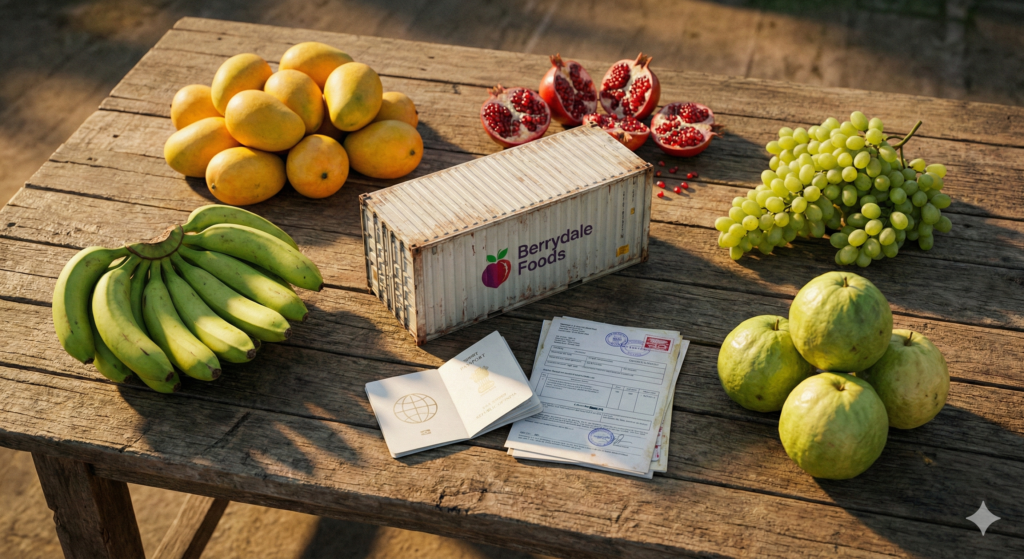
India is often called the “Fruit Basket of the World,” and for good reason. With its diverse climate and rich soil, the country produces some of the most sought-after tropical fruits globally. For international buyers, the decision to import fruits from India is not just about taste—it is about profitability and consistent supply.
As we enter 2026, the demand for exotic and immunity-boosting fruits is rising in markets like Europe, the Middle East, and Japan. But which fruits offer the best margins? In this guide, Berrydale Foods breaks down the top 5 powerhouse fruits you should add to your procurement list this year.
1. Alphonso Mangoes: The King of Exports
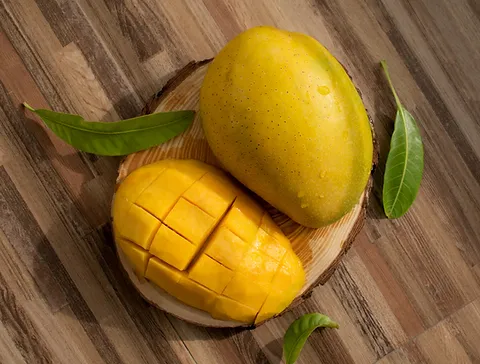
No list about how to import fruits from India is complete without the Alphonso Mango.
Why Import: Known as the “King of Fruits,” the GI-tagged Alphonso commands premium prices in luxury markets like Japan, the UK, and the USA.
Season: March to June.
Berrydale Advantage: We offer Vapor Heat Treatment (VHT) certified mangoes suitable for strict markets like Japan.
2. G9 Cavendish Bananas: The Year-Round Staple
While mangoes are seasonal, bananas are the backbone of the fruit trade. India is the world’s largest producer of bananas.
Why Import: The G9 variety is famous for its long shelf life and spotless golden skin, making it perfect for supermarkets in the Middle East and Russia.
Availability: 365 days a year.
3. Bhagwa Pomegranates: The Ruby of Health
Indian pomegranates, specifically the ‘Bhagwa’ variety, are superior to their Spanish or American counterparts in terms of color and seed softness.
Why Import: High antioxidant content makes them a hit in the health-conscious European market.
Durability: Their thick skin allows for long transit times via sea freight, lowering your shipping costs.
4. Nashik Grapes: Sweet & Crunch
Nashik, often called the “Wine Capital of India,” produces world-class table grapes. According to APEDA, Indian grapes meet the strictest global safety standards.
Varieties: Thompson Seedless, Black Seedless.
Market: These are in huge demand in the UK and Netherlands during the winter window when European production is low.
5. Green Guava: The Superfood Underdog
Often overlooked, the giant Indian Green Guava is rapidly gaining popularity for its Vitamin C content—5 times that of an orange!
Why Import: It is a niche product with low competition but high loyalty among Asian diasporas in the USA and Canada.
Why Choose Berrydale Foods?
Deciding to import fruits from India requires a partner who understands logistics. At Berrydale Foods, we don’t just sell fruit; we manage the entire supply chain. From Global GAP certified farms to temperature-controlled containers, we ensure your shipment arrives fresh, whether it’s going to Tokyo or Toronto.
You can view our full range of products on our Product Catalogue.
Key Takeaways for Importers
Planning: Always plan 3 months ahead when you import fruits from India to secure the best sea freight rates.
Documentation: Ensure your partner handles all phytosanitary paperwork required to import fruits from India legally.
Quality: Work with Global GAP certified farms to ensure that when you import fruits from India, the produce meets European safety standards.