
Berrydale Foods began not with green fields, but with the sound of a crowbar hitting solid rock at the foothills of the Malangad hills.
When we first stood on our land at the foothills of the Malangad hills, near the rugged Konkan range, it felt less like a farm and more like a battlefield. The ground was scorched, defiant, and dry. Massive boulders sat like ancient guardians on the surface, and underneath, the earth was a labyrinth of stone. Most farmers would have brought in heavy tractors to tear the land open, but we looked at the hills and made a silent pact: we would not wound this land to feed ourselves.
We chose the path of Ahinsa—non-violence—toward the soil. We decided then and there that no tractor would ever cross these fields. A tractor’s weight crushes the delicate world of microbes, the “good souls” of the soil that make food taste like food. We accepted the rocks. We accepted the dryness. And with a bit of hope and a lot of sweat, we started planting Alphonso mango saplings brought from the red soil of Dapoli.
The Eight-Year Thirst and Soil Regeneration
For the first eight years, our faith was tested daily. In the Konkan, water is life, and we had none. My father-in-law, a man of incredible grit, was desperate. He tried to drill for a borewell once, twice, three times… four times. Each time, the machine came up dry. There was no underground water table to speak of. It felt like the land was refusing us.
But we didn’t give up. We looked at the way nature survives. We planted Samata grass (Elephant grass) across the farm. Its deep roots acted like a sponge, holding the moisture from the monsoon rains and preventing the topsoil from washing away. We dug a small artificial pond and relied on an old well to keep our saplings alive.
Then, after eight years of patience, we tried one more time. When the water finally surged from the earth, the atmosphere changed instantly. It wasn’t just “irrigation”; it was a blessing. Our laborers, who had worked through the dust for years, celebrated by taking baths right there in the open fields and cooking their meals with that first sweet taste of groundwater. The desert was finally becoming a garden.
A Promise to Anusha: Chemical-Free Farming
People often ask me why I quit my career to become a farmer. The answer isn’t found in a textbook; it’s found in the eyes of my seven-year-old daughter, Anusha.
The “last nail in the coffin” for my corporate life was a string of tragedies. We lost several friends to cancer, and the death of my close friend and hair stylist, Vinod Kharka, broke something inside me. I realized that the food we were buying in the city was filled with slow poisons—pesticides, growth hormones, and chemicals.
I looked at Anusha and made a promise: I will never feed you anything that I haven’t grown with my own hands.
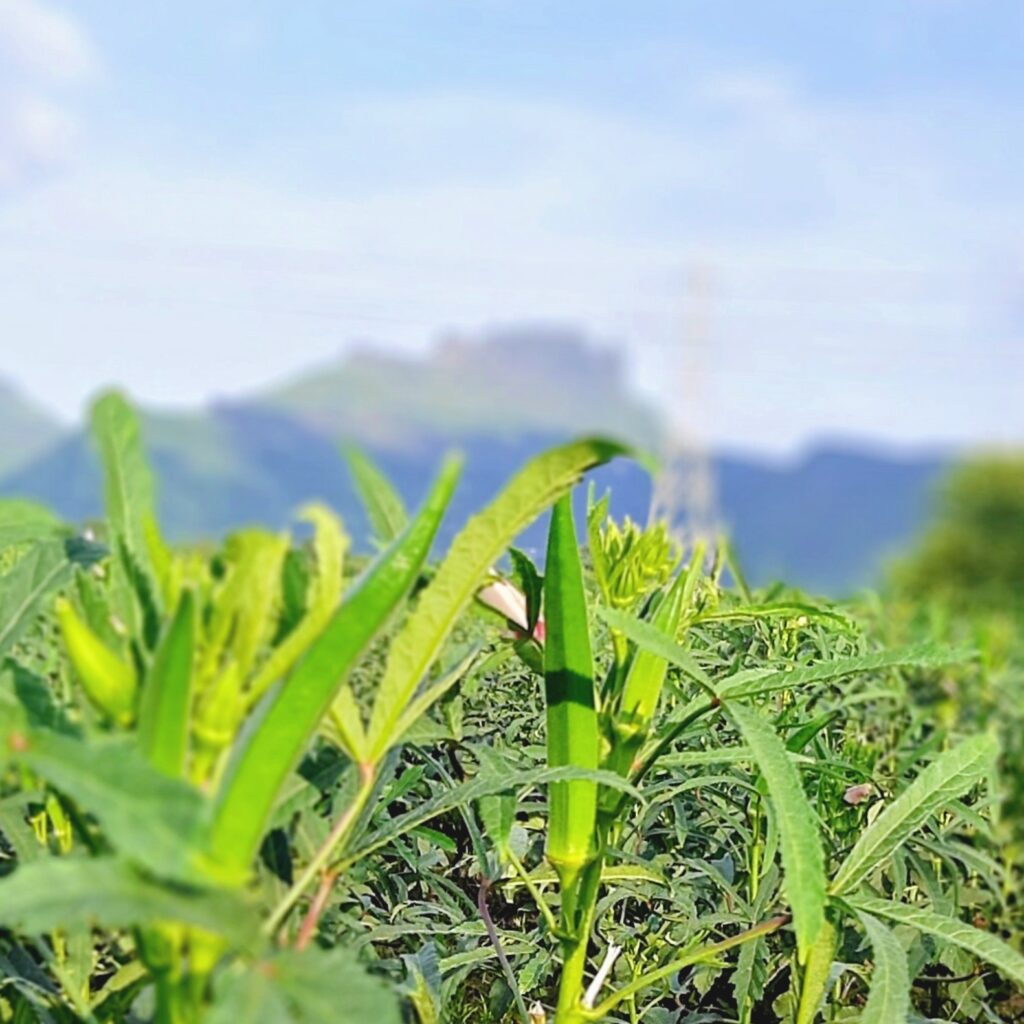
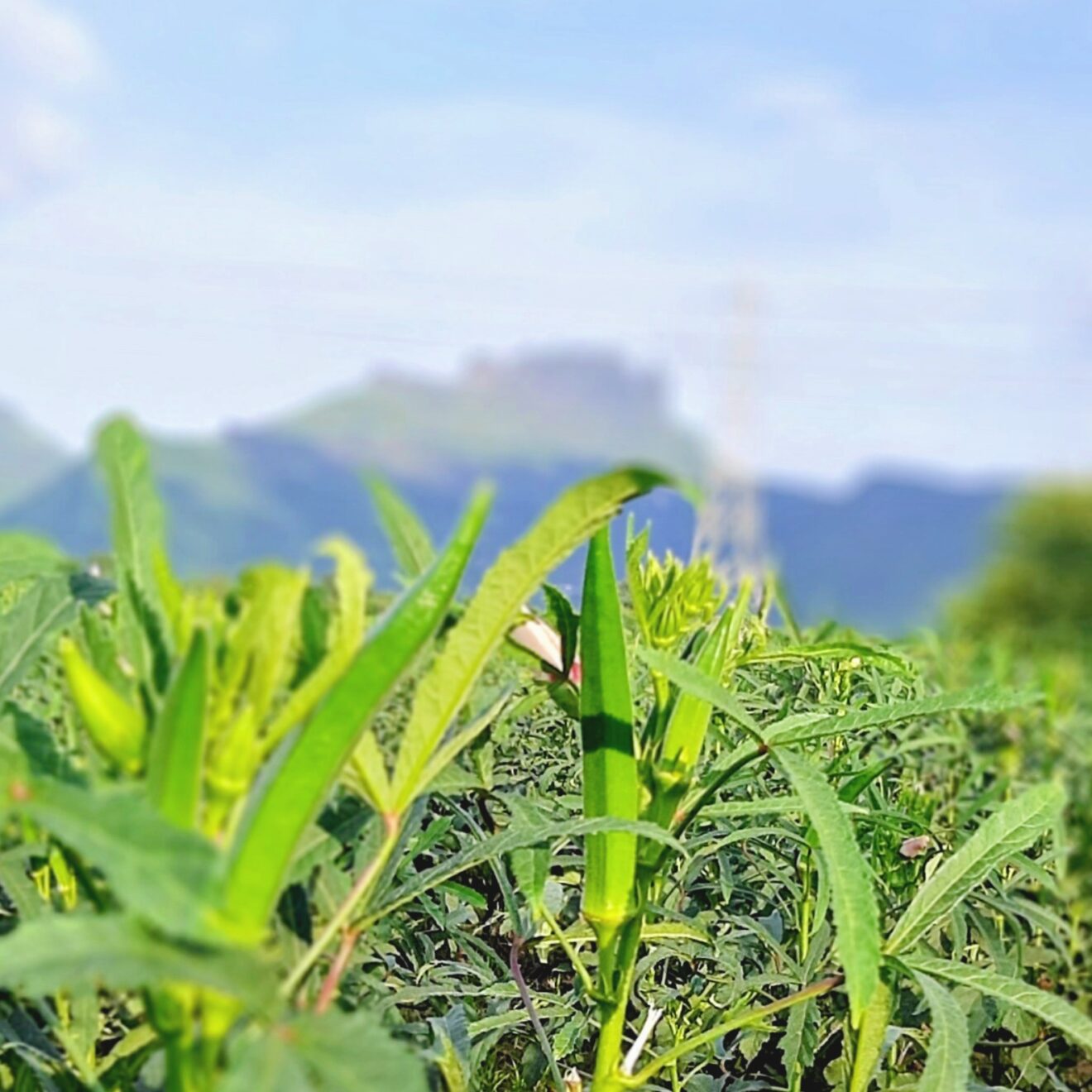
Today, Anusha is the heart of the farm. If you visit us, you’ll see her running through the rows of Okra (Ladies Finger). She doesn’t wait for us to cook it. She plucks it straight from the plant and eats it raw. It’s so fresh it has a literal “snap”—a sound so loud you can hear it from feet away. I would never dare let her do that with market-bought okra, which is often coated in chemicals to keep it looking green. Here, our “pesticides” are simple: cow dung ash, lemon juice, and neem oil.
And then, there are the mangoes. Anusha loves them with a passion that only a child of the Konkan can have. When our Alphonso, Kesar, or Amrapalli mangoes ripen, she is the first to know. To see her face covered in golden mango juice, knowing that the fruit is pure, chemical-free, and nourished by the earth, makes every year of struggle worth it.
The Vedic Heartbeat: Gir Cows and Bilona Ghee
Our farm found its true soul when my friend Suryakant Kadam joined us. An engineer who was working in Singapore, he felt the same pull back to the roots. He gave up the city life to manage our dairy.
We brought in authentic Gir cows, the sacred breed that provides A2 milk. These cows are the center of our ecosystem. They graze on the Samata grass we planted years ago, and in return, they give us the ingredients for our Vedic fertilizers. With the guidance of Mr. Abhimanyu Mane from the Maharashtra State Agricultural Marketing Board (MSAMB), we create Jeev Amrut, Bheej Amrut, and Panchagvya. We feed this “nectar” to our trees every alternate day.
We don’t “process” our dairy; we craft it. We use the ancient Bilona method for our ghee. We boil the milk, set it into curd, and then hand-churn it with wooden whisks to separate the butter before slowly clarifying it. We even use old carton boxes and pallets for our vermicompost pits to ensure no soil infections occur. It is slow, it is tedious, and it is beautiful.
From Posari to Bandra: The 12-Hour Freshness Run
We quickly realized that even the best produce can be ruined by bad logistics. When we tried using third-party delivery apps, our delicate custard apples and water apples would arrive bruised and battered.
So, we changed the game.
Every night, while the city sleeps, our farm in Posari village is buzzing. Our workers harvest the greens and fruits at their peak. By the early hours of the morning, our own delivery team is on the road. From our branch to your doorstep in Bandra, the journey takes less than 12 hours. By 8:00 AM, our customers are receiving fresh vegetable delivery and milk that were still attached to the earth the evening before.
The Berrydale Foods Harvest
Our dry land has become a lush “Food Forest.” We don’t believe in monoculture; we believe in diversity. Today, our farm is home to:
The Mango Orchard: Alphonso (Hapus), Kesar, Pairi, and Amrapalli.
The Tropical Canopy: Bananas (the small, sweet ones!), Jackfruit, Coconut, Jamoon, Water Apple, and Custard Apple.
The Vedic Garden: The famous “Snap” Okra, Mysore Brinjal, Maize, Beetroot, and Carrots.
The Greens: Palak, Laal Maat, Gongura, and fresh Coriander.
The Dairy: Fresh A2 Gir Cow Milk, Bilona Ghee, and handmade Paneer.
We may get smaller yields than the industrial farms. Our mangoes might not all be the exact same size. But when you taste them, you go crazy for the flavor. You aren’t just buying food; you are supporting a philosophy that says health is more important than profit, and that nature, when treated with respect, gives back a hundredfold.
Welcome to Berrydale Foods. Welcome to the family.
The Berrydale Farm-to-Table Recipe Series
1. The “Anusha Snap” Raw Okra Salad
Since your okra is grown without tractors (preserving soil microbes) and protected only by cow dung ash and neem oil, it is one of the few places in the world where you can enjoy okra raw.
Ingredients: 10-12 fresh Berrydale Okras, 1 tsp Bilona Ghee, juice of half a lemon, a pinch of rock salt, and toasted sesame seeds.
The Method: Wash the okra and pat them completely dry. Slice them into very thin “coins.” Toss them in a bowl with the lemon juice, salt, and sesame seeds. Drizzle the Bilona Ghee on top for a nutty finish.
The Experience: You will hear the “snap” Anusha loves. It’s crunchy, refreshing, and full of live fiber.
2. Vedic Bilona Ghee & Amrapalli Mango Shira
This is the ultimate comfort food. It uses the richness of your hand-churned ghee and the intense sweetness of your favorite mangoes.
Ingredients: 1 cup Semolina (Sooji), 1/2 cup Berrydale Bilona Ghee, 1 cup fresh Amrapalli or Alphonso pulp, 2 cups A2 Gir Cow Milk, and jaggery to taste.
The Method: Roast the sooji in our Bilona Ghee until it turns golden and smells like a temple. Slowly add the warm A2 milk. Once the milk is absorbed, fold in the fresh mango pulp. Stir until the mixture leaves the sides of the pan.
The Experience: The aroma of hand-churned ghee and Konkan mangoes is a smell that stays with you forever.
Farmer’s Insight: Internal link: Shop our Bilona Ghee
3. Coastal “Laal Maat” (Red Amaranth) Stir-Fry
Our leafy greens are nourished by Jeev Amrut, giving them a deep, earthy flavor that market greens lack.
Ingredients: One bunch of Berrydale Laal Maat (chopped), 2 cloves of garlic (crushed), 1 green chili, and a handful of freshly grated farm coconut.
The Method: Heat a teaspoon of Bilona Ghee. Sauté the garlic and chili until fragrant. Add the Laal Maat. Since it’s delivered within 12 hours of harvest, it will cook in just 3-4 minutes. Turn off the heat and toss in the fresh coconut.
The Experience: Simple, rustic, and vibrant. It tastes exactly like a morning in Posari.
4. Pan-Seared A2 Paneer & Mysore Brinjal
The creaminess of your handmade paneer pairs perfectly with the firm, earthy texture of the Mysore Brinjals you cultivate.
Ingredients: 200g Berrydale A2 Paneer, 4-5 Mysore Brinjals (cubed), 1 tsp turmeric, and a dash of black pepper.
The Method: Cube the paneer and lightly sear it in Bilona Ghee until the edges are crisp. Remove the paneer and in the same pan, sauté the brinjals with turmeric and pepper until soft. Toss the paneer back in for a final minute.
The Experience: No heavy masalas are needed—the quality of the A2 milk and the soil-nourished brinjal provide all the flavor you need.
5. The “Konkan Sunrise” A2 Smoothie
The perfect breakfast using your small, sweet bananas and nutrient-dense A2 milk.
Ingredients: 2 small Berrydale Bananas, 1 glass chilled A2 Gir Cow Milk, 1 tsp honey, and a pinch of cardamom.
The Method: Simply blend all ingredients until frothy.
The Experience: These small bananas have a much higher sugar and mineral concentration than the large commercial ones. It’s the perfect fuel for a busy day in the city.
Farmer’s Insight: Internal link: Order A2 Gir Cow Milk